Guests usually choose Parklands for a specific reason: a hospital appointment, an office in Westlands, a family visit. Then they arrive and find they are staying in an actual neighbourhood rather than a strip of hotels, and start wondering what is around them.
This is a guide to that. What Parklands is like, what is nearby, and the practical everyday things people ask us about once they have settled in.
What Kind of Place Parklands Is
Parklands sits north of Nairobi’s city centre and is one of the older established residential districts in the city. It is noticeably calmer than the middle of town, which is much of its appeal: leafier streets, less noise, and a pace that makes it possible to sleep properly.
Parklands is residential and leafier than the middle of the city.
Much of the character comes from what sits at street level. Parklands is dense with small independent businesses: grocers, bakeries, pharmacies, tailors, hardware shops and a great many restaurants, a good number of which have been in the same place for decades. Very little of it is chain-branded, and it is busy in the ordinary way that residential districts are busy rather than the way tourist areas are.
The effect for visitors is welcoming and unshowy. It is a working neighbourhood rather than a tourist one, where the shops are open because people nearby need them, and that is exactly why the practical things you want on a longer stay are genuinely close by rather than an expedition.
Healthcare, Which Brings Many People Here
Parklands is one of the most significant medical districts in Nairobi, and for a large number of our guests that is the reason for the trip.
L’Aziz Suites sits opposite Aga Khan University Hospital and near MP Shah Hospital. That proximity does real work for anyone attending appointments over days or weeks: early starts become manageable, and it is possible to return and rest between a morning consultation and an afternoon procedure rather than waiting it out in a corridor.
On a stay of any length, the neighbourhood you actually use is the one within a few streets. Parklands does well here.
City Park Market is close by and is where a good number of our guests go for fresh fruit and vegetables, which makes restocking a short errand rather than an outing. Pharmacies, shops and the ordinary run of everyday services are near at hand, which matters a great deal when you are staying long enough to need shampoo, a phone charger, or something for a headache.
This is the quiet advantage of staying somewhere residential. You are not planning a trip every time you need something small.
Green Space
Nairobi is unusually well provided with green space for a city of its size, and Parklands is well positioned for it.
City Park is close, and Karura Forest, a little further out, offers walking and cycling under proper tree cover. Both are genuinely restorative if you are here for a demanding reason. Guests visiting relatives in hospital, or caring for someone through treatment, often find that an hour outdoors somewhere green is the most useful thing they do all day.
Eating
Parklands is one of the better parts of Nairobi to eat in, and it is one of the first things guests remark on.
For a residential district, the concentration of places to eat is unusually good, and the range is wide: casual everyday spots, bakeries and cafes, takeaway counters, and a number of more formal restaurants for when the occasion calls for it. Many are long-established and independently run. Westlands, a short drive away, adds a much wider choice again if you want to go further afield.
That said, one of the reasons people book serviced apartments for longer stays is precisely so they are not eating out every night. Every suite here has a full kitchen, and most guests staying more than a week end up using it for at least some meals. Families in particular tend to settle into a rhythm of cooking some and going out for others, which we have written about in our guide to family suites and longer visits.
What Is Nearby
Parklands is well placed for a number of the places visitors need to reach.
Westlands, a short drive away, is the nearest major business district, with corporate offices, shopping and a wide choice of places to eat.
The United Nations offices in Gigiri are within easy reach, along with the diplomatic and international organisation presence around them.
The city centre is accessible for anyone with business there, though as with everything in Nairobi the journey depends more on the hour than the distance.
Karura Forest and City Park cover the green space, as above.
Getting Around
Most visitors move around Nairobi by taxi or ride-hailing app, both of which are widely used and straightforward once you have a local SIM and mobile data.
The one rule worth internalising is that journey times here are governed by the time of day rather than the map. A trip that is quick in the evening can be slow during the working day, so if you have somewhere to be at a fixed time, leave more room than seems necessary. Locals do.
Who Parklands Suits
It suits people staying a while. Visitors attending hospital appointments, professionals working out of Westlands or Gigiri for weeks at a time, families visiting relatives, and anyone who would rather be somewhere residential and quiet than in the middle of the city.
The neighbourhood suits people staying a while, and so do the suites.
It suits people less well if what you want is to be in the thick of Nairobi’s nightlife. That is a fair trade, and most of our guests make it deliberately.
Come and See It
If Parklands sounds like the right base for your trip, check availability and tell us your dates. Let us know why you are coming and roughly how long you expect to stay, and we will help you find the right fit.
Arrival is the part of a trip you are least equipped to handle well. You have been travelling for hours, you are carrying everything you brought, and the decisions come at you in a run: which queue, which currency, which car, which road. It helps to know roughly what is coming.
This is what to expect between stepping off the plane and putting your bag down in Parklands.
Which Airport You Will Land At
Almost all international arrivals come into Jomo Kenyatta International Airport, on the eastern side of the city. If you are flying in on a smaller regional or domestic aircraft, you may instead land at Wilson Airport, which sits closer to the centre and handles lighter traffic.
Both connect to Parklands by road. The route and the length of the journey depend far more on the time of day than on the distance, which is the single most useful thing to understand about moving around Nairobi.
Before You Land
Two things are worth sorting before you travel rather than in the queue.
Entry requirements. What you need depends on your nationality, and the rules are revised periodically. Check the current position with official sources shortly before you fly rather than assuming last year’s process still applies.
Your address in Nairobi. Arrival paperwork generally asks where you are staying. Have the property name and address written down somewhere you can reach without unlocking a phone with a flat battery, along with your booking reference.
Through the Airport
The sequence is the familiar one: immigration, then baggage reclaim, then customs, then the arrivals hall. Queues vary with how many aircraft have landed at once, so the same airport can feel quiet one evening and slow the next.
Two errands are worth doing before you leave the building, because both are harder once you are out in the city and tired.
Money. Have some Kenyan shillings for small immediate costs. Card acceptance is good in Nairobi, but cash smooths the first hour.
A local SIM. Mobile connectivity is worth having straight away, both for calls and because mobile money is used widely in Kenya for everyday payments. If you are staying more than a few days, this is one of the highest-value things you can do on arrival.
Getting to Parklands
Two options cover most arrivals, and the right one depends mostly on what time you land.
Licensed taxis from the airport rank. Straightforward, always available, and the simplest choice if you would rather not deal with an app while carrying luggage. Agree the fare before you set off.
Ride-hailing apps. Widely used in Nairobi and usually cheaper, provided you have working data and can find the designated pickup area. This is where having sorted a SIM inside the terminal pays off.
Telling us when you land. We do not run airport transfers ourselves, so the last leg will be a taxi or a ride-hailing trip either way. It is still worth sharing your flight details when you book. It means we know when to expect you rather than working it out at the door, and our team can advise on which of the two options above tends to suit the hour you are arriving. That is worth asking about if you are landing late at night, travelling with children, or coming for medical treatment.
Whichever you choose, treat the journey time as elastic. Nairobi traffic is heavily dependent on the hour, and a road that moves freely late in the evening can be slow during the working day. If you have something scheduled soon after landing, leave far more room than the distance suggests.
Arriving in Parklands
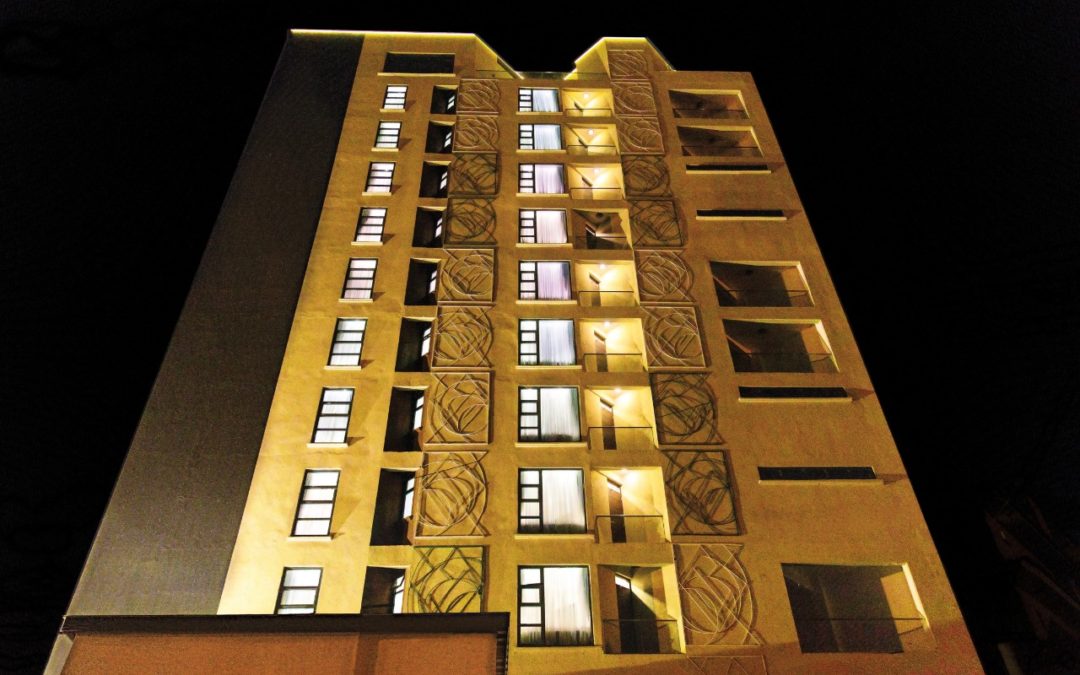
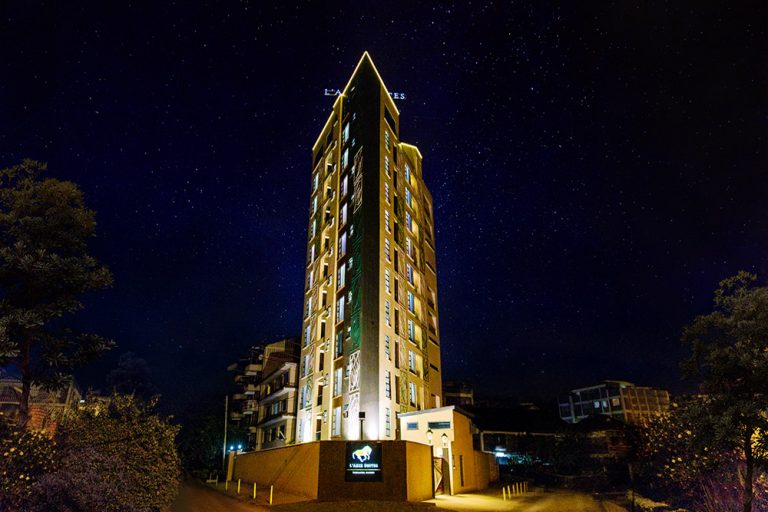
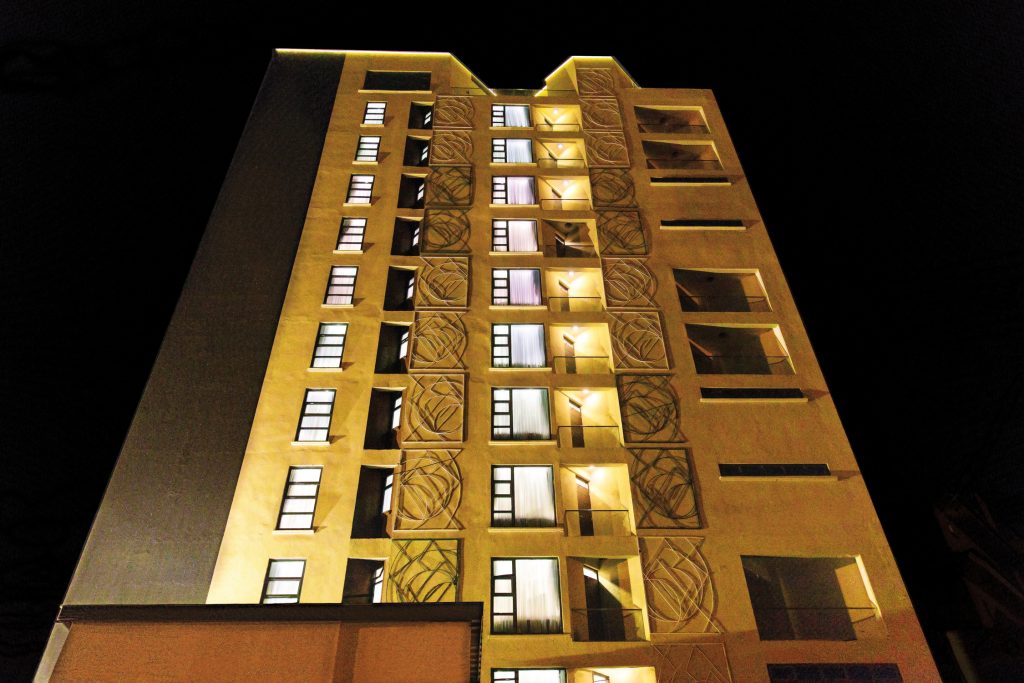
Parklands sits north of the city centre and is noticeably calmer than the middle of town, which is a considerable relief at the end of a long journey. L’Aziz Suites is off Limuru Road, opposite Aga Khan University Hospital and near MP Shah Hospital.
Parklands is calmer than the centre of town at the end of a long journey.
The first evening is mostly about undoing the journey. A few things make that easier.
The first evening is mostly about undoing the journey.
Every suite has a full kitchen, which is more useful on arrival night than at any other point in a stay. Long flights leave people hungry at strange hours, and being able to make something simple without going back out is worth a great deal when you have just put your bag down. There is also high-speed WiFi throughout the property, so telling people at home that you landed safely is the work of a moment.
Beyond that, the advice is dull and correct: drink water, resist the urge to unpack everything, and go to bed at a local hour if you possibly can. Our junior, family and executive suites all give you a separate living area, so the first evening does not have to be spent sitting on the end of a bed.
Nairobi is where a great deal of regional business gets done. If you work for an organisation operating across East and Central Africa, sooner or later the work brings you here, and it rarely brings you for two nights.
Regional postings, project cycles, audits, training rounds, negotiations and secondments tend to be measured in weeks. Travellers arriving from Kampala, Kigali, Dar es Salaam, Kinshasa, Bujumbura or Juba often find themselves booked into a hotel room designed for a stay a fraction as long. This is about why that mismatch wears on you, and what to do instead.
Why the Trips Are Long
Nairobi functions as a regional hub, and hub work is not quick work. Multinationals run their regional operations here. International organisations, development agencies and NGOs keep substantial offices in the city, including the United Nations offices in Gigiri, which are within easy reach of Parklands. The Westlands business district, a short drive away, holds a concentration of corporate offices, financial institutions and meeting space.
None of that produces overnight trips. It produces three weeks of workshops, a month of implementation, a quarter spent standing up an office. The work is real and it takes time.
What Goes Wrong in Week Two
A hotel room is a well-designed object for a short stay. It stops working somewhere around the second week, and it stops working in predictable ways.
You run out of anywhere to be. There is a bed, and there is a chair facing the bed. Living out of a suitcase stops feeling temporary and starts feeling like your actual life. Every meal is bought, which is fine on Tuesday and grim by the following Thursday. And if you are working across borders, you are taking calls at whatever hour suits a colleague in another time zone, from a room where the only surface is a bedside table.
None of this is dramatic. It just steadily erodes how well you work and how you feel while doing it.
What a Serviced Apartment Changes
Somewhere to work that is not the bed. Our suites have a work desk, high-speed WiFi throughout the property, and a separate living area. That last one matters more than it sounds: it means you can take a call, close a laptop, and then be somewhere else in the evening without leaving the building.
Somewhere to close the laptop and still not be sitting on the bed.
A full kitchen, which changes how you eat. After a fortnight of restaurant food, the ability to make your own breakfast, keep something in the fridge, or cook a meal that tastes like home is genuinely restorative. For travellers from across the region who would rather cook what they know than work through another menu, this is often the single most valued thing in the apartment.
Housekeeping, so the flat runs itself. Regular housekeeping is what separates a serviced apartment from a short-let where you become the building manager. You get apartment space without apartment chores.
Room for the trip to change shape. Extended work travel is rarely fixed. Projects extend, someone joins you, a two-week trip becomes six. Space absorbs that better than a room does.
If you are travelling on a per diem or against a project budget, the nightly rate is the wrong number to optimise.
Over a long stay, meals are the cost that quietly dominates. Three bought meals a day for a month is a substantial line item, and it is the line item a full kitchen attacks directly. Cooking even some of your own meals changes the total meaningfully, and it does so without you having to downgrade where you sleep.
There is a related point worth making to whoever approves your travel: for stays past a couple of weeks, comparing total cost rather than nightly cost usually favours the apartment. If you are weighing the two formats properly, we set out the full comparison in serviced apartment vs hotel.
Practical Notes for Regional Travellers
Check entry requirements before you fly. Rules differ depending on your nationality and they are revised from time to time, so confirm the current position with official sources rather than relying on what applied last trip.
Sort connectivity early. A local SIM is worth having if you are here for weeks, particularly for mobile money, which is used widely in Kenya for everyday payments.
Plan for variable journey times. Traffic in Nairobi varies enormously depending on the time of day, so build slack into the mornings you cannot be late.
Say how long you are staying when you book. Extended stays are planned differently from nightly ones, and it is worth telling us up front so we can arrange things around your schedule.
Think about whether family will join you. On longer postings they often do, and it is easier to plan for that at the start than to move mid-trip.
Where We Sit
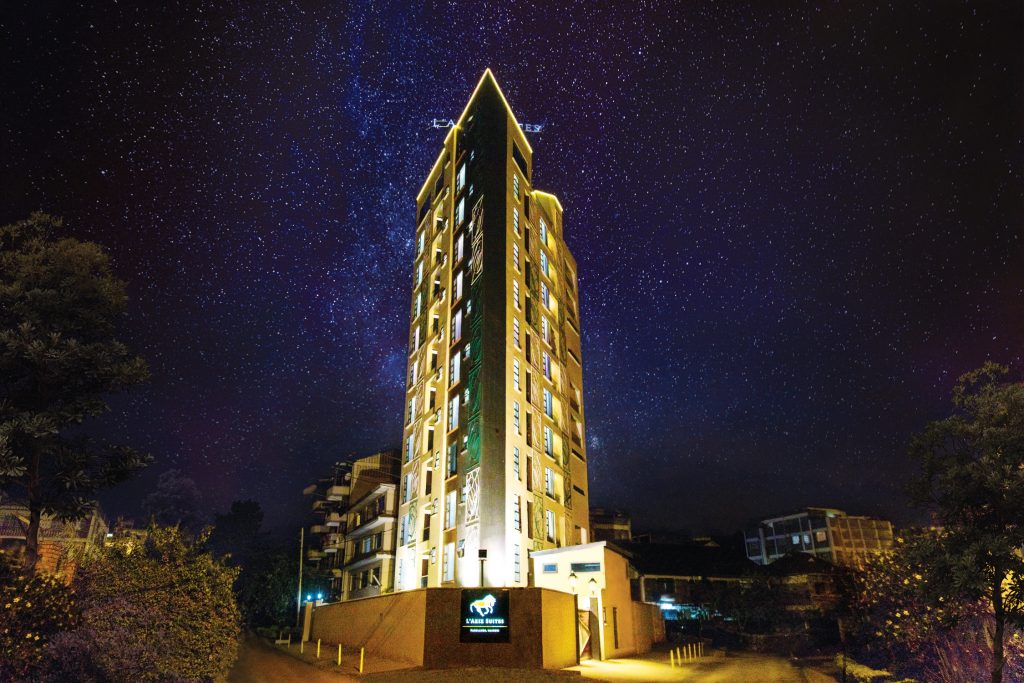
L’Aziz Suites is off Limuru Road in Parklands, opposite Aga Khan University Hospital and near MP Shah Hospital, with Westlands a short drive away and the United Nations offices in Gigiri within easy reach. Parklands itself is calmer than the centre of the city, which is worth something when you are here long enough that sleeping well matters.
Off Limuru Road in Parklands, with Westlands a short drive away.
Guests come to us for exactly these stays: regional professionals in Nairobi for weeks rather than nights, who need to work properly, eat properly and rest properly for the duration.
Planning a Longer Trip?
Tell us your dates, how long you expect to stay, and what your working days look like. If your plans are still moving, say that too. Get in touch to check availability and we will help you set the trip up properly from the start.
The phrases get used loosely. Plenty of places call themselves serviced apartments when they are really just rooms with a kettle, and plenty of hotels now offer something apartment-shaped without changing the sign outside. If you are trying to book somewhere in Nairobi and cannot work out which you actually want, the confusion is not your fault.
So here is a straight comparison: what genuinely differs between the two, where each one wins, and how to tell which suits the trip you are about to take.
The Short Version
A hotel sells you a room and a set of services around it. A serviced apartment sells you a small home and keeps it maintained while you live in it.
That single distinction explains almost everything else. A hotel is optimised for a short, low-effort stay where somebody else handles every detail. A serviced apartment is optimised for staying put long enough that you need to do ordinary life things: cook something, do a wash, work at a desk, put the children to bed at a different hour from your own.
What a Serviced Apartment Actually Gives You
Three things, mainly, and they matter in proportion to how long you stay.
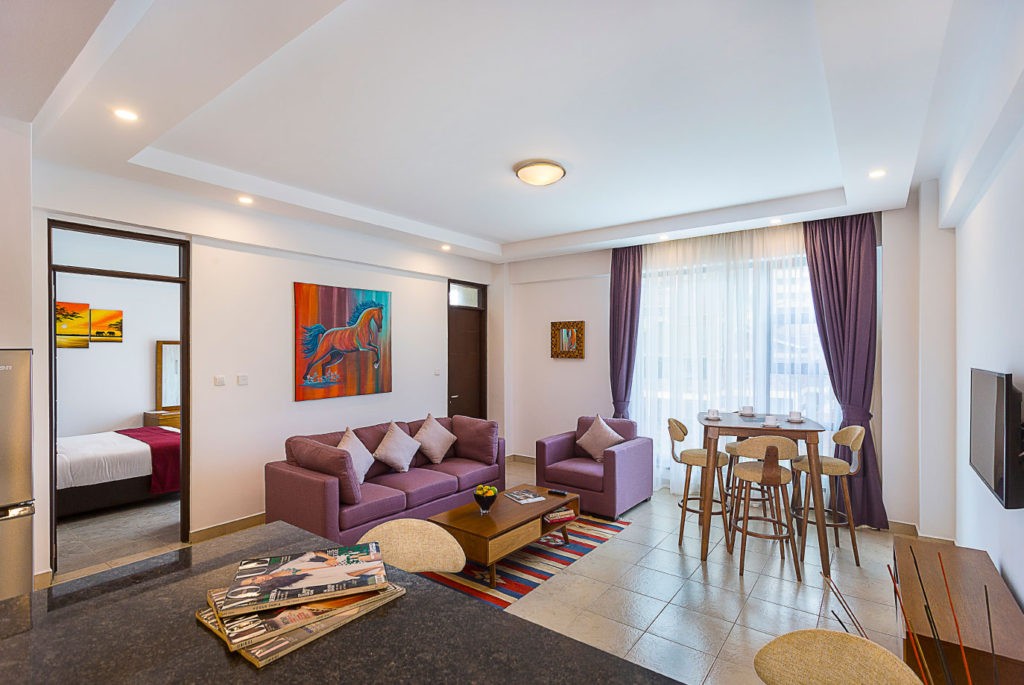
The defining difference: a living area and a full kitchen, not just a room.
Separate space. The defining feature is a living area that is not the bedroom. It sounds minor until you are on night nine of a trip and realise you have nowhere to sit that is not a bed. It is what makes it possible for two people to keep different hours, or to take a work call without conducting it from under a duvet.
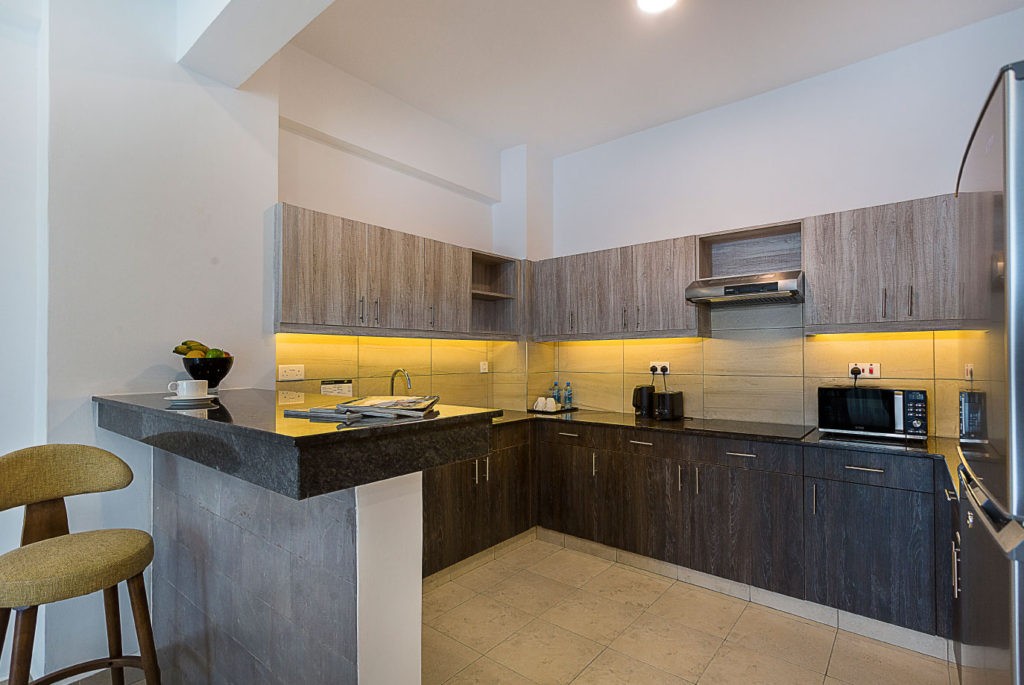
A full kitchen. Being able to make your own food changes the rhythm of a stay completely. Breakfast at an hour that suits you, a proper cup of tea without ordering it, and meals that fit whatever dietary requirements you happen to have rather than whatever the menu offers.
The “serviced” part. This is what separates a serviced apartment from an ordinary short-let rental, and it is the part people most often overlook. Housekeeping, maintenance when something breaks, and staff you can actually reach. You get the space of an apartment without becoming responsible for running it.
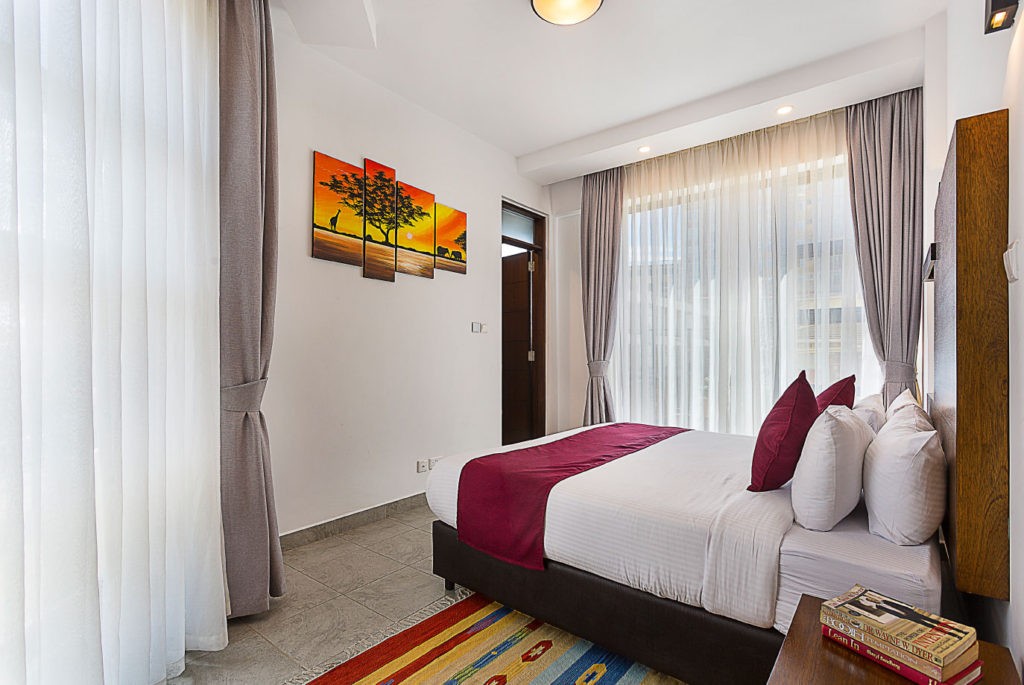
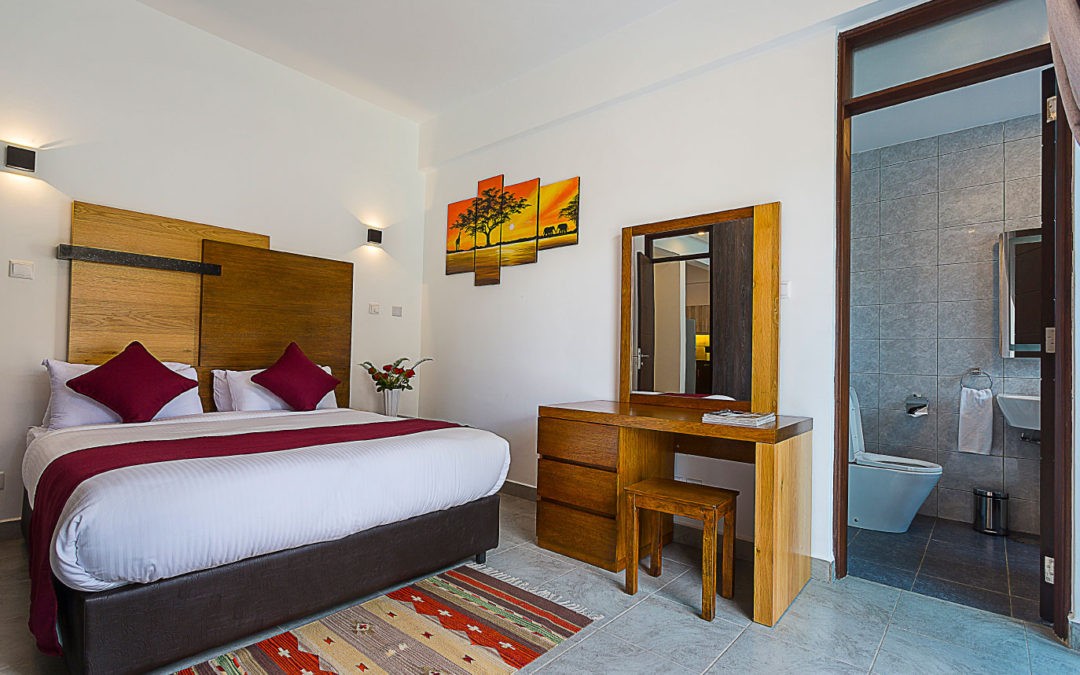
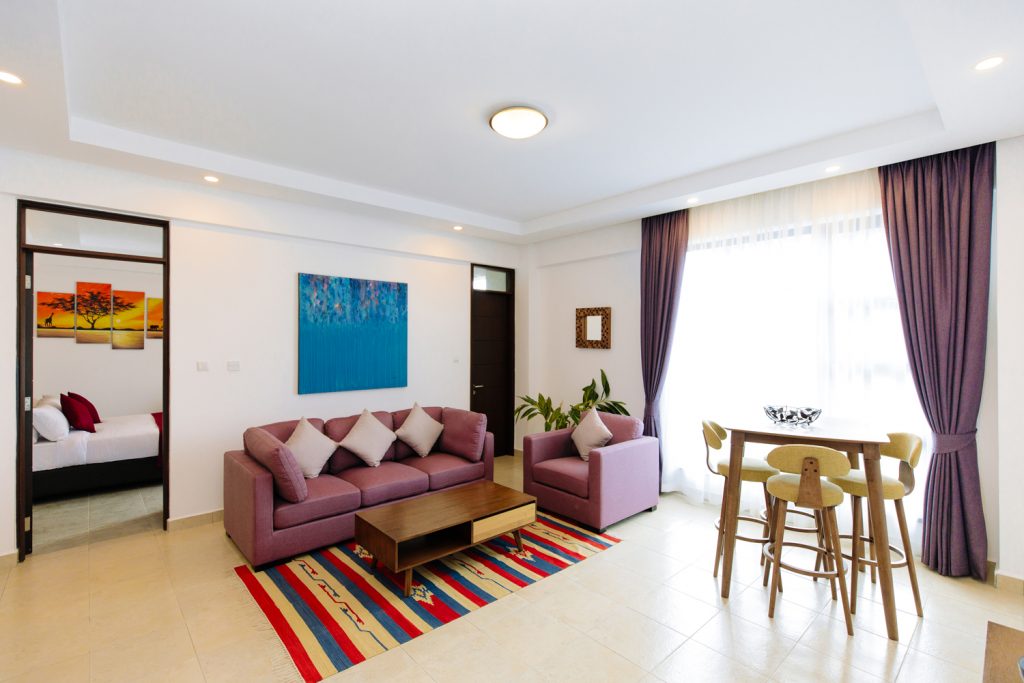
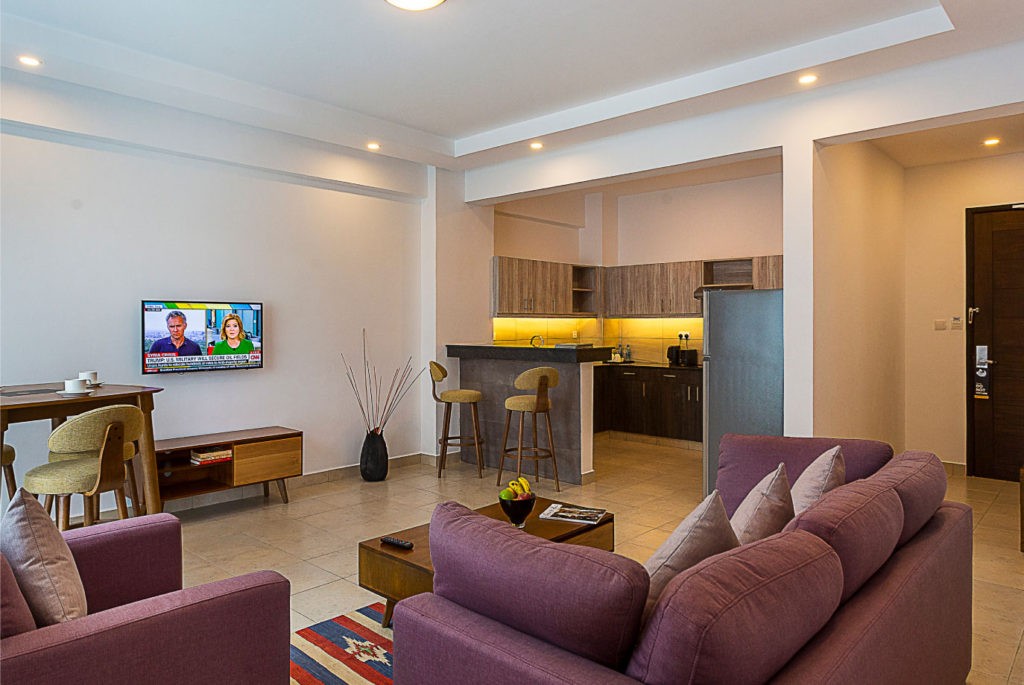
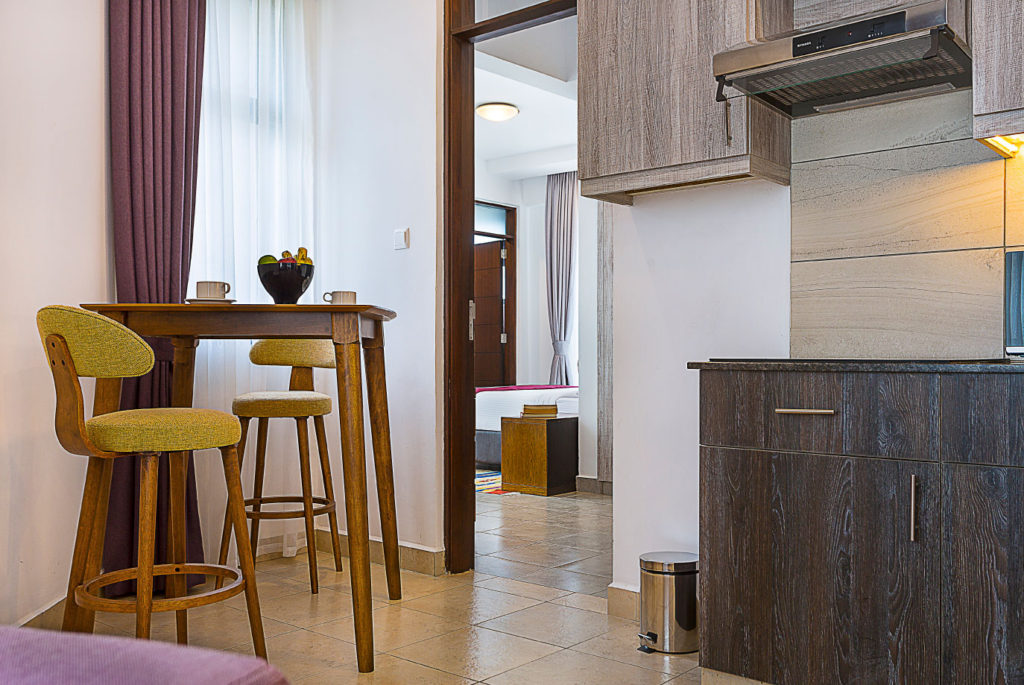
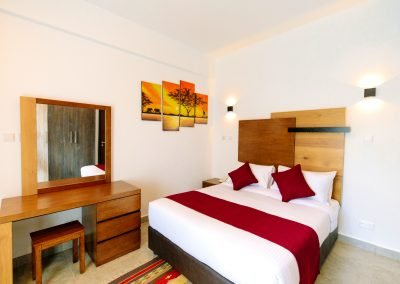
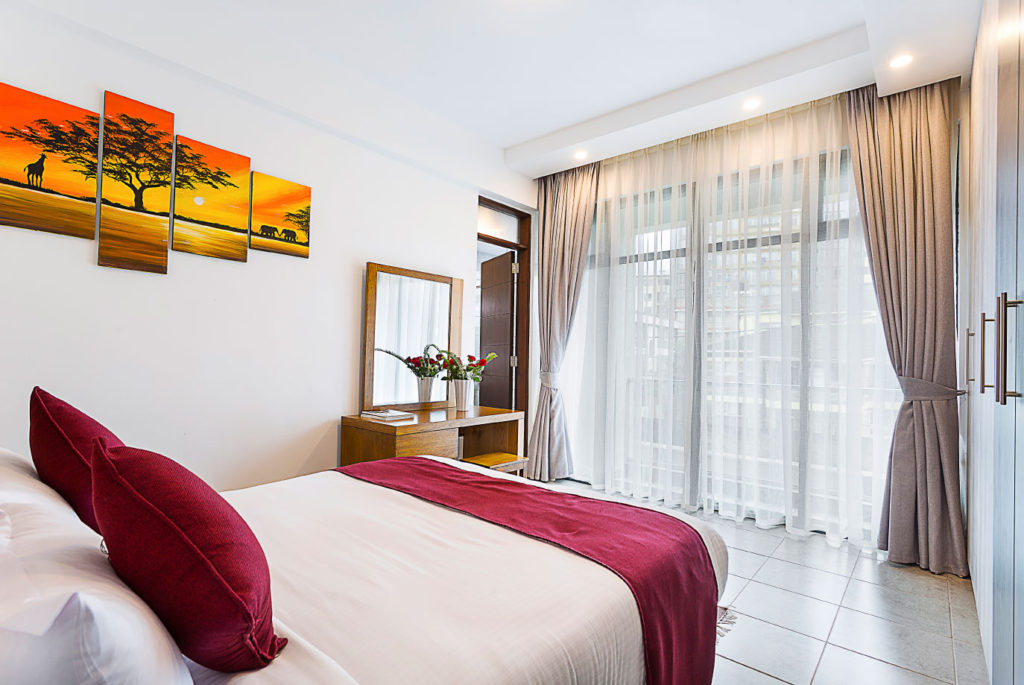
At L’Aziz Suites, our fully furnished suites in Parklands come with a full kitchen, a separate living area, a work desk, high-speed WiFi, a smart TV, and regular housekeeping. We offer junior, family, and executive layouts, so the amount of space scales with what you need.
What Hotels Genuinely Do Better
It would be easy to write this section dishonestly. We will not, because if a hotel is the right answer for your trip you will work that out anyway, and you would rather hear it now.
Hotels are better when your stay is short and you want to think about nothing. Two nights for a conference, an overnight before an early flight, a weekend where the entire point is that somebody else handles everything. In those cases a full kitchen is dead weight and a living area is a room you will never sit in.
Hotels also tend to be stronger on daily full service, on-site dining, and the kind of front-desk presence that turns up at any hour. If you want dinner to arrive without you thinking about it, a hotel is built for that and an apartment is not.
The honest rule of thumb: under about three nights, a hotel usually wins. Past a week, an apartment usually wins. The middle is genuinely a matter of preference.
The Cost Question
Nightly rates are a poor way to compare the two, because they measure the wrong thing.
A hotel room and a serviced apartment can look similar per night while producing very different totals over a fortnight. The apartment absorbs costs the hotel leaves outside the rate: meals you would otherwise buy three times a day, the drink you would order rather than make, the family of four eating out every evening because there is no alternative.
The reverse is also true. For two nights, an apartment’s extra space is something you pay for and never use. Cost only tips in the apartment’s favour once the stay is long enough for self-catering to actually happen, and a full kitchen you never open saves nobody anything.
Compare total cost across the whole stay, not the headline nightly figure.
Which One You Need
Most people can place themselves fairly quickly:
Past about a week, the extra space starts doing real work.
A short business trip. One or two nights, meetings all day, out again. A hotel is fine, and simpler.
An extended work stay. Once you are somewhere for weeks, you need a desk, reliable WiFi, and somewhere to exist outside working hours. An apartment, comfortably.
Travelling as a family. Separate space stops being a luxury the moment bedtimes differ. An apartment, almost always, for the reasons we set out in our guide to family suites.
Relocating or house-hunting. You need a base rather than a room, often at short notice and for an uncertain length of time. An apartment.
A weekend where the point is being looked after. A hotel. Genuinely.
Where the Two Overlap
The useful middle ground is a property that runs apartment space with hotel service, which is what a hotel apartment is meant to mean. You get the kitchen, the separate living area, and the room to spread out, alongside housekeeping, staff on hand, and a straightforward check-in.
Apartment space with hotel service is the middle ground most long-stay guests want.
That is the model we run at L’Aziz Suites. We sit off Limuru Road in Parklands, opposite Aga Khan University Hospital and near MP Shah Hospital, with the Westlands business district a short drive away and the United Nations offices in Gigiri within easy reach. Guests come to us for medical stays, extended work trips, and family visits, which are precisely the stays where a room stops being enough.
What to Ask Before You Book
Whichever way you lean, these questions separate a real serviced apartment from a room with a kettle:
What is actually in the kitchen? “Self-catering” covers a wide range. Ask what you can genuinely cook with.
How often is housekeeping, and what does it include? Daily and weekly are very different propositions over a month.
Is the living area separate, or is it a corner of the bedroom? Photographs are generous. Ask directly.
What happens for longer stays? Extended bookings often work differently from nightly ones, so it is worth asking rather than assuming.
How reliable is the internet, really? If you are working, this is not a detail.
Who do you contact when something goes wrong? The answer tells you how “serviced” the place truly is.
Still Not Sure?
Tell us about the trip. How long you are staying, who is coming, and what you need to be able to do while you are here. If a hotel suits you better we will say so. If what you actually need is space, a full kitchen, and people who keep it all running, that is exactly what we do.
Get in touch to check availability, and tell us what the trip involves. We would rather point you to the right stay than simply fill a suite.
A hotel room can be perfectly comfortable for two nights. Stretch that to two weeks with children in tow, and the same room starts to feel like a waiting area. Suitcases have nowhere to live. Bedtime becomes a negotiation conducted in whispers because everyone is sleeping in the same space. Somebody is always hungry at the wrong hour.
Families travelling to Nairobi for longer visits need something closer to an apartment than a room. That is what our family suites in Parklands are built for. Here is what they offer, and why each of those things matters more the longer you stay.
Where a Standard Hotel Room Runs Out
The difficulty with a conventional room is not really its size. It is that a family has to do everything in one space at the same time.
Young children go to bed early. Adults do not. Teenagers keep their own hours entirely. If you have flown in from a different time zone, nobody is on the same schedule for the first few days anyway. In a single room, one person’s routine sets everybody’s, and the whole family ends up sitting in the dark at half past eight because the youngest is finally asleep.
Over a long weekend that is survivable. Over a fortnight it wears everybody down.
Room to Spread Out
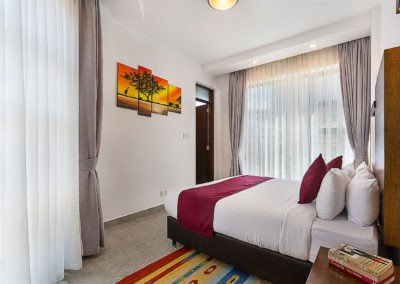
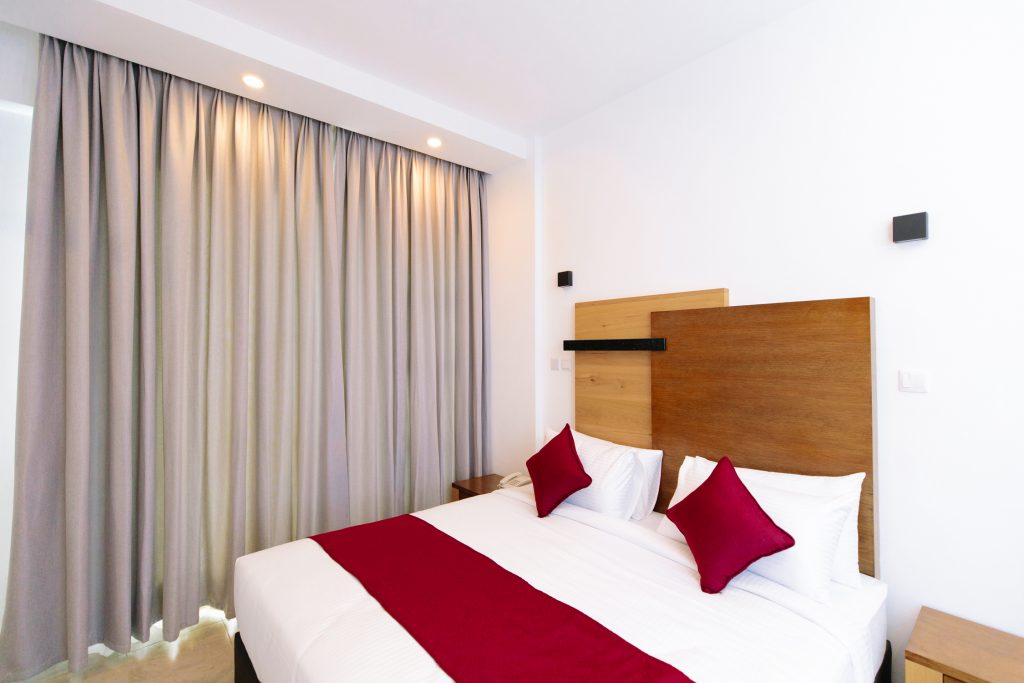
Our family suites give you a separate living area alongside the bedroom, and that division does most of the work. It means there is somewhere to be that is not the bed.
Somewhere to be that is not the bed, which matters more the longer you stay.
In practice, it looks like this. Children settle in the bedroom at a sensible hour while the adults keep the evening going next door. Bags get unpacked properly instead of lived out of. There is a table to eat around, somewhere to spread out a map or a laptop, and floor space for children who have been sitting still on a plane for far too long.
The suites come fully furnished with regular housekeeping, so the ordinary upkeep of a longer stay is not left to you. After a fortnight, having someone else deal with the towels is not a small thing.
Privacy, Which Everyone Needs Some Of
Privacy sounds like a luxury concern until you have spent ten days in close quarters with people you love.
Being able to close a door between rooms restores a great deal of goodwill.
Parents need an hour in the evening that is genuinely theirs. Older children need somewhere to retreat that is not the bathroom. If one member of the family is unwell, or jet-lagged, or simply has had enough of everyone, being able to close a door between rooms restores a great deal of goodwill.
This matters especially for families travelling for reasons that are not holidays. If you are in Nairobi for medical appointments, for a funeral, for work, or to help a relative through something difficult, the days can be emotionally heavy. Somewhere to be quietly alone for twenty minutes is worth more than any amenity.
The Kitchen Changes How a Long Stay Feels
Every suite has its own full kitchen, and for families staying more than a few nights it quickly becomes the most-used part of the apartment.
Breakfast at an unreasonable hour is a solvable problem with your own kitchen.
Meals happen on your schedule, not a restaurant’s. Small children eat early and often. Jet-lagged ones want breakfast at four in the morning. Being able to make toast at an unreasonable hour without dressing the whole family and going out is genuinely liberating.
Fussy eaters and particular diets are much easier. If someone in your family only eats a narrow set of things, or is managing an allergy, a food intolerance, or dietary requirements around health or faith, cooking it yourself removes the daily negotiation entirely.
Babies and toddlers need their own supplies. Bottles, formula, purees, and snacks all need somewhere to be prepared and stored.
The cost adds up differently. Restaurant meals for a family of four, three times a day, for two weeks, is a significant sum. Cooking even half of those meals changes the arithmetic of a long stay considerably.
City Park Market is close by for fresh fruit and vegetables, so restocking is a short errand rather than an outing. Many families find that the shape of a long stay settles once they have a few staples in the cupboard.
A Base That Suits Families
L’Aziz Suites sits off Limuru Road in Parklands, which is a calmer part of Nairobi than the centre. For families, that quiet is practical rather than merely pleasant. Children sleep better, and so do you.
The location also puts a good deal within easy reach:
Karura Forest for walking and cycling under the trees, and one of the easiest ways to give children somewhere to run.
City Park Market for fresh produce, near enough for an everyday errand.
The Nairobi National Museum for an afternoon that works for a range of ages.
The Maasai Market for handmade souvenirs and supporting local artisans.
Nairobi National Park, around fifty minutes away, for a safari that does not require leaving the city behind for days.
Aga Khan University Hospital and MP Shah Hospital, both close by, which matters to families visiting for medical reasons and is quietly reassuring for everyone else.
If You Are Working While the Family Is Here
Plenty of parents bring their families along on longer work trips, or keep working through a family visit because the calendar did not cooperate.
Each suite has a work desk and high-speed WiFi throughout the property, so calls and video meetings hold up. The separate living area earns its keep here too: you can take a meeting with a door closed rather than from the corner of a bedroom while family life carries on around you. There is also a smart TV, which is a perfectly respectable way to keep children occupied for the length of one important call.
Choosing the Right Suite
We offer several layouts, including junior, family, and executive suites, and the right one depends on how many of you there are, how long you are staying, and how much separation you need.
The simplest approach is to tell us. Let us know how many adults and children are coming, your dates, and anything particular you need, and we will point you to the layout that fits rather than leaving you to guess from photographs. If you are staying for an extended period, mention that as well so we can plan around it.
Come and Settle In
A good family stay is mostly made of unremarkable things: everyone sleeping, meals at the right times, and enough room that nobody is permanently in anybody else’s way. That is what our family suites are designed to provide.
If you are planning a longer visit to Nairobi with your family, get in touch and tell us what you need. We will do our best to make the stay feel less like living out of a suitcase and more like being at home.
Lorem Ipsum is simply dummy text of the printing and typesetting industry. Lorem Ipsum has been the industry’s standard dummy text ever since the 1500s,
We use cookies to ensure that we give you the best experience on our website. If you continue to use this site we will assume that you are happy with it.


Recent Comments