
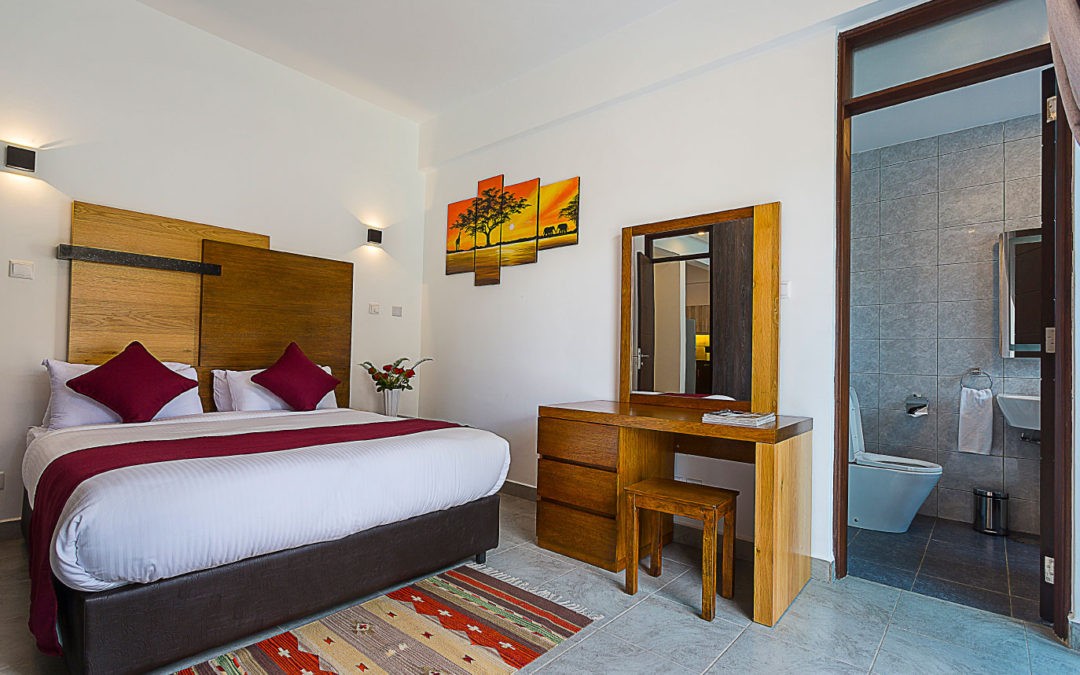
Nairobi is where a great deal of regional business gets done. If you work for an organisation operating across East and Central Africa, sooner or later the work brings you here, and it rarely brings you for two nights.
Regional postings, project cycles, audits, training rounds, negotiations and secondments tend to be measured in weeks. Travellers arriving from Kampala, Kigali, Dar es Salaam, Kinshasa, Bujumbura or Juba often find themselves booked into a hotel room designed for a stay a fraction as long. This is about why that mismatch wears on you, and what to do instead.
Why the Trips Are Long
Nairobi functions as a regional hub, and hub work is not quick work. Multinationals run their regional operations here. International organisations, development agencies and NGOs keep substantial offices in the city, including the United Nations offices in Gigiri, which are within easy reach of Parklands. The Westlands business district, a short drive away, holds a concentration of corporate offices, financial institutions and meeting space.
None of that produces overnight trips. It produces three weeks of workshops, a month of implementation, a quarter spent standing up an office. The work is real and it takes time.
What Goes Wrong in Week Two
A hotel room is a well-designed object for a short stay. It stops working somewhere around the second week, and it stops working in predictable ways.
You run out of anywhere to be. There is a bed, and there is a chair facing the bed. Living out of a suitcase stops feeling temporary and starts feeling like your actual life. Every meal is bought, which is fine on Tuesday and grim by the following Thursday. And if you are working across borders, you are taking calls at whatever hour suits a colleague in another time zone, from a room where the only surface is a bedside table.
None of this is dramatic. It just steadily erodes how well you work and how you feel while doing it.
What a Serviced Apartment Changes
Somewhere to work that is not the bed. Our suites have a work desk, high-speed WiFi throughout the property, and a separate living area. That last one matters more than it sounds: it means you can take a call, close a laptop, and then be somewhere else in the evening without leaving the building.
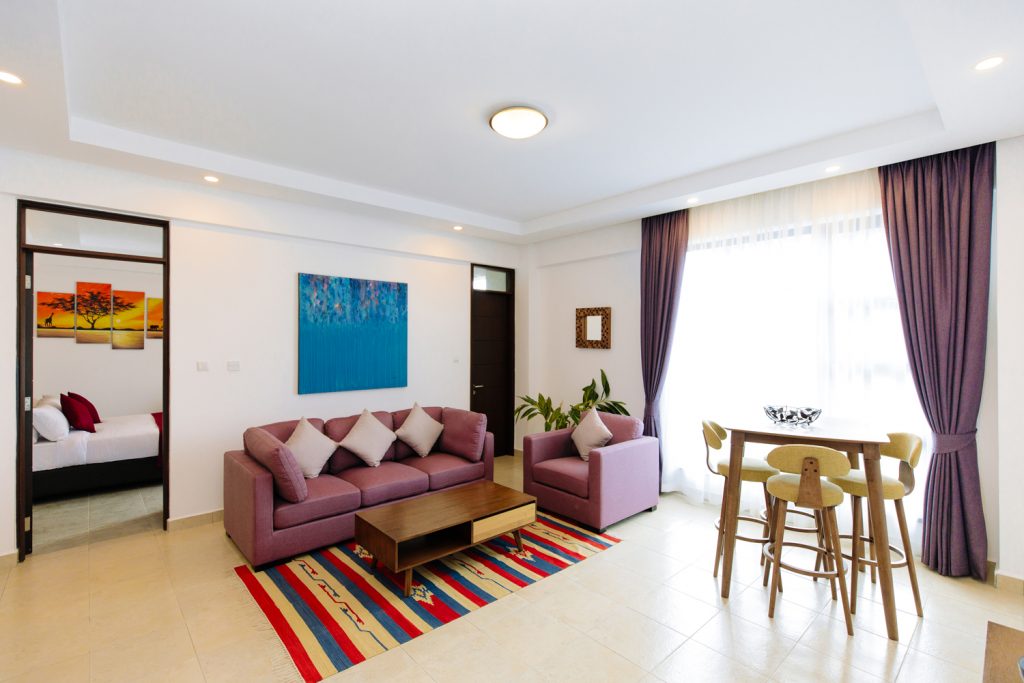
A full kitchen, which changes how you eat. After a fortnight of restaurant food, the ability to make your own breakfast, keep something in the fridge, or cook a meal that tastes like home is genuinely restorative. For travellers from across the region who would rather cook what they know than work through another menu, this is often the single most valued thing in the apartment.
Housekeeping, so the flat runs itself. Regular housekeeping is what separates a serviced apartment from a short-let where you become the building manager. You get apartment space without apartment chores.
Room for the trip to change shape. Extended work travel is rarely fixed. Projects extend, someone joins you, a two-week trip becomes six. Space absorbs that better than a room does.
We offer junior, family and executive suites, so the layout can match how long you are staying and who is with you.
The Budget Argument
If you are travelling on a per diem or against a project budget, the nightly rate is the wrong number to optimise.
Over a long stay, meals are the cost that quietly dominates. Three bought meals a day for a month is a substantial line item, and it is the line item a full kitchen attacks directly. Cooking even some of your own meals changes the total meaningfully, and it does so without you having to downgrade where you sleep.
There is a related point worth making to whoever approves your travel: for stays past a couple of weeks, comparing total cost rather than nightly cost usually favours the apartment. If you are weighing the two formats properly, we set out the full comparison in serviced apartment vs hotel.
Practical Notes for Regional Travellers
- Check entry requirements before you fly. Rules differ depending on your nationality and they are revised from time to time, so confirm the current position with official sources rather than relying on what applied last trip.
- Sort connectivity early. A local SIM is worth having if you are here for weeks, particularly for mobile money, which is used widely in Kenya for everyday payments.
- Plan for variable journey times. Traffic in Nairobi varies enormously depending on the time of day, so build slack into the mornings you cannot be late.
- Say how long you are staying when you book. Extended stays are planned differently from nightly ones, and it is worth telling us up front so we can arrange things around your schedule.
- Think about whether family will join you. On longer postings they often do, and it is easier to plan for that at the start than to move mid-trip.
Where We Sit
L’Aziz Suites is off Limuru Road in Parklands, opposite Aga Khan University Hospital and near MP Shah Hospital, with Westlands a short drive away and the United Nations offices in Gigiri within easy reach. Parklands itself is calmer than the centre of the city, which is worth something when you are here long enough that sleeping well matters.
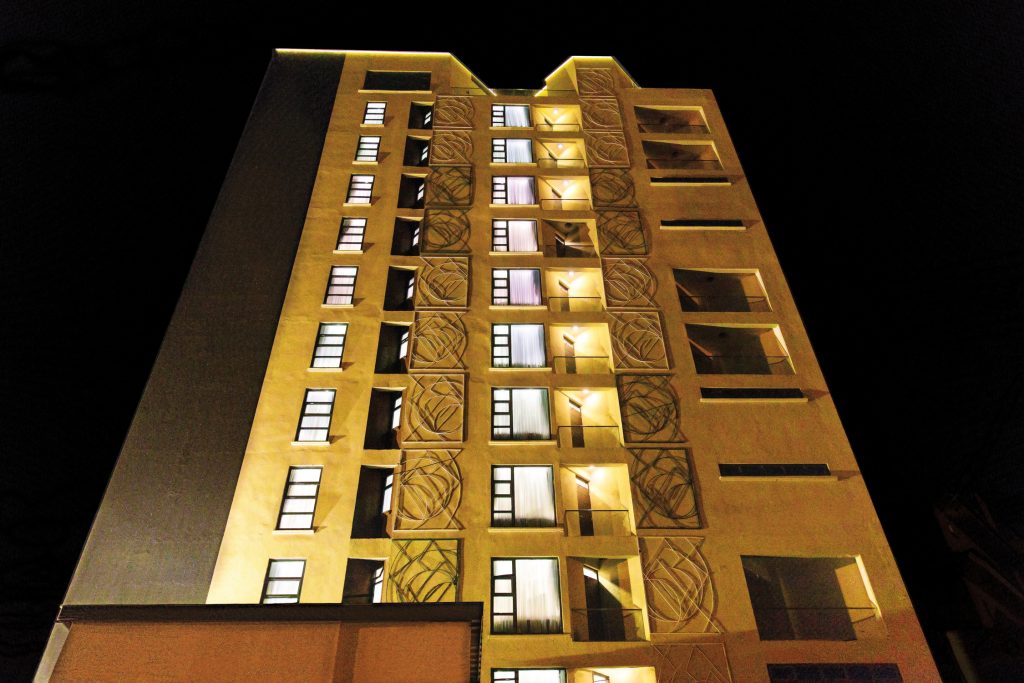
Guests come to us for exactly these stays: regional professionals in Nairobi for weeks rather than nights, who need to work properly, eat properly and rest properly for the duration.
Planning a Longer Trip?
Tell us your dates, how long you expect to stay, and what your working days look like. If your plans are still moving, say that too. Get in touch to check availability and we will help you set the trip up properly from the start.

Recent Comments